The Meaning Behind Balinese Ceremony Paintings
Balinese art is more than something beautiful to look at. It is often connected to culture, devotion, daily life, and spiritual tradition. One of the most meaningful themes in Balinese artwork is the ceremony. From temple offerings and prayer journeys to Melasti processions and sacred rituals, Balinese ceremony paintings capture moments that are deeply connected to the island’s identity.
A Balinese ceremony painting does not only show people walking, carrying offerings, or gathering near a temple. It represents devotion, harmony, purification, and the relationship between humans, nature, and the divine. This is what makes this type of artwork special for homes, villas, hotels, restaurants, and private collections.
At Tebu Painting Gallery, many paintings are inspired by traditional Balinese ceremonies. Through expressive brushwork, rich texture, soft colors, and cultural details, these artworks bring the spiritual atmosphere of Bali into modern interior spaces.
What Is a Balinese Ceremony Painting?
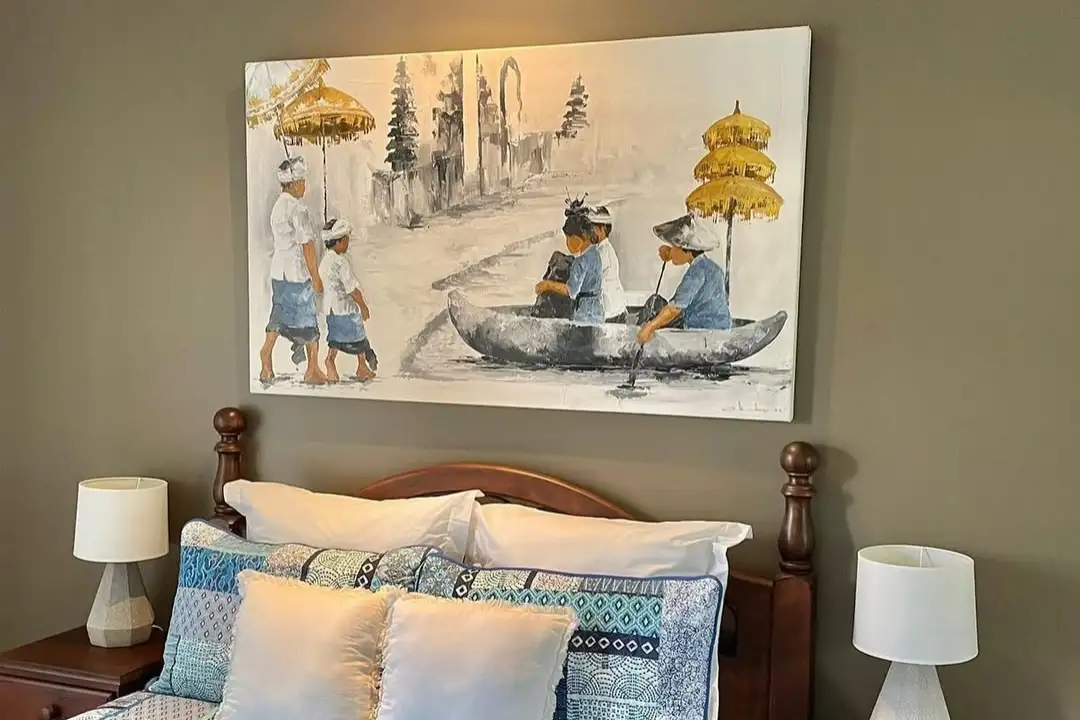
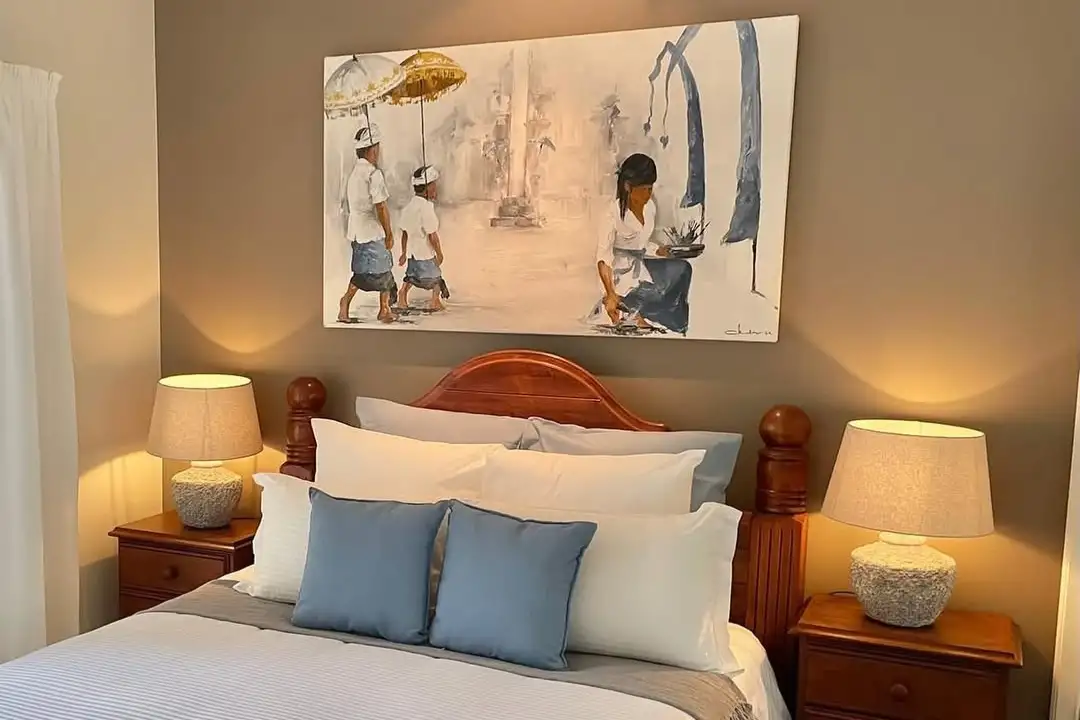
A Balinese ceremony painting is an artwork that portrays traditional religious or cultural ceremonies in Bali. These paintings may show people walking to the temple, carrying banten or offerings, holding ceremonial umbrellas, joining a Melasti procession, or preparing for prayer.
The subject may look simple at first, but every detail carries meaning. The clothing, colors, posture, offerings, and movement often reflect the atmosphere of Balinese Hindu life.
Common visual elements in Balinese ceremony paintings include:
- Traditional white clothing
- Women carrying offerings
- Men wearing udeng or traditional headcloth
- Children walking to the temple
- Ceremonial umbrellas
- Temple gates or shrine elements
- Banten, flowers, and sacred items
- Groups walking in procession
- Soft spiritual backgrounds
These paintings are not just decorative. They tell a story about Bali’s living culture.
Why Ceremonies Are Important in Balinese Life
Ceremonies are part of everyday life in Bali. They are held for temples, families, villages, ancestors, nature, and important religious days. Many ceremonies are connected to the idea of balance and purification.
In Balinese culture, harmony is very important. People seek balance between humans and God, humans and other people, and humans and nature. This philosophy is often reflected in the visual feeling of Balinese ceremony paintings.
The scenes may look peaceful, but they are full of movement and meaning. A woman carrying offerings, a family walking to the temple, or a group joining a procession can represent gratitude, respect, and spiritual connection.
This is why Balinese ceremony paintings feel warm, calm, and meaningful when placed inside a room.
The Meaning of Temple Offerings
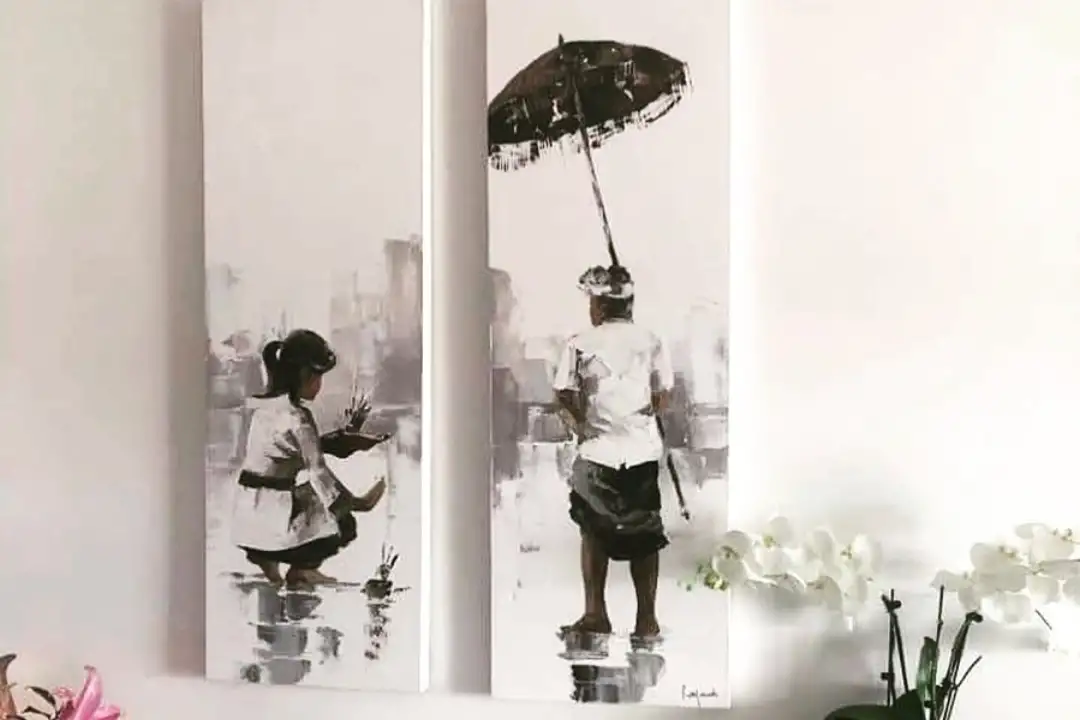
One of the most common elements in Balinese ceremony paintings is the offering. In Bali, offerings are known as banten. They may include flowers, leaves, fruits, rice, incense, and other symbolic items.
In paintings, offerings are often shown being carried on the head or held by hand. This creates a graceful visual composition, especially when combined with traditional clothing and soft movement.
Offerings symbolize devotion, gratitude, and sincerity. They are not only physical objects but also expressions of respect. When an artist paints someone carrying offerings, the artwork often captures a moment of spiritual intention.
For interiors, this kind of painting brings a gentle and respectful atmosphere. It feels cultural, peaceful, and elegant without being too overwhelming.
Melasti and the Symbol of Purification
One of the most powerful themes in Balinese ceremony paintings is Melasti. Melasti is a purification ceremony held before Nyepi, the Balinese Day of Silence. During Melasti, Balinese Hindus bring sacred objects from temples to the sea, lake, or other holy water sources.
The purpose of Melasti is purification. The ceremony is believed to cleanse the self and the world from negativity, impurities, and past mistakes. Water is seen as a source of life and spiritual cleansing.
In paintings, Melasti is often represented through processions. People walk together in traditional clothing, carrying offerings, sacred objects, and ceremonial umbrellas. The scene may feel grand, sacred, and full of movement.
A Melasti-inspired painting can become a strong cultural statement piece. It carries the meaning of renewal, cleansing, and spiritual harmony. This makes it especially suitable for villa lobbies, hotel interiors, meditation spaces, restaurants, and homes that want to bring the essence of Bali into the room.
Ngiring and the Journey of Devotion
In Bali, the word ngiring can be understood as joining or accompanying a sacred procession. In ceremony paintings, this theme is often shown through groups of people walking together toward a temple, beach, or sacred location.
The beauty of an ngiring scene is in the movement. The figures may walk slowly, carrying offerings or ritual items. The atmosphere feels respectful and calm. Even without showing many facial details, the painting can express devotion through body language and composition.
This type of artwork is especially beautiful because it captures a living tradition. It does not feel staged or artificial. It feels like a moment from real Balinese life.
For collectors and interior designers, ngiring-themed paintings are valuable because they combine cultural storytelling with elegant visual composition.
Children on the Way to the Temple
Some Balinese ceremony paintings show children walking to the temple while carrying flowers, offerings, or prayer items. This subject has a softer emotional feeling.
Children in ceremony scenes represent continuity. They show how tradition is passed from one generation to the next. They also bring innocence, purity, and warmth into the artwork.
A painting of children going to the temple can feel gentle and meaningful. It is suitable for homes, family villas, boutique hotels, and peaceful spaces where the owner wants an artwork with emotional depth.
The theme is simple, but the meaning is strong. It reminds viewers that culture lives through daily practice, family, and community.
The Role of Color in Balinese Ceremony Paintings
Color has a strong influence on the feeling of a painting. Many Balinese ceremony artworks use white, grey, black, blue, gold, red, or earthy tones.
- White often represents purity, prayer, and spiritual cleanliness.
- Gold or yellow can represent warmth, sacredness, and ceremonial beauty.
- Blue can bring calmness and elegance.
- Red may create strength, energy, and visual focus.
- Black and grey often add depth, contrast, and balance.
At Tebu Painting Gallery, many ceremony-inspired paintings use soft neutral backgrounds with selected color accents. This makes the artworks easier to place in modern interiors while still keeping their cultural identity.
A painting with white clothing and a grey background may feel calm and refined. A painting with yellow or magenta accents may feel more vibrant and ceremonial. A painting with blue tones may feel peaceful and elegant.
Texture and Expressive Brushwork
Texture is one of the details that makes these paintings feel alive. Thick brushstrokes and layered paint create depth, movement, and character.
In Balinese ceremony paintings, texture can help show the folds of clothing, the movement of people walking, the shape of offerings, or the atmosphere of a temple scene. Instead of focusing on perfect realism, expressive brushwork captures emotion and energy.
This is why textured paintings work beautifully in interior spaces. They do not look flat. They change with light, angle, and distance. From far away, the painting creates atmosphere. Up close, viewers can enjoy the details of the brushwork.
For villas, hotels, and luxury homes, textured artwork adds a sense of craftsmanship and artistic value.
Why Balinese Ceremony Paintings Are Perfect for Interiors
Balinese ceremony paintings are suitable for many types of interiors because they combine culture, elegance, and atmosphere.
They work well in:
- Villas
- Hotels
- Restaurants
- Living rooms
- Bedrooms
- Dining areas
- Reception spaces
- Private galleries
- Meditation rooms
- Boutique resorts
- Office interiors
For a Bali villa, a ceremony painting helps connect the interior to the island’s spirit. For a hotel or restaurant, it creates a stronger sense of place. For a private home, it brings calmness, cultural beauty, and personal meaning.
These paintings are especially suitable for interiors that use natural materials, warm lighting, wooden furniture, stone elements, neutral colors, and tropical architecture.
Ceremony Paintings as Cultural Storytelling
A good painting does not only fill a wall. It tells a story.
Balinese ceremony paintings tell stories about devotion, family, community, purification, gratitude, and sacred tradition. They allow viewers to feel a part of Bali’s cultural atmosphere even when they are inside a modern room.
This storytelling value is one reason why these paintings feel more meaningful than generic wall decor. They have identity. They have context. They carry emotion.
For collectors, this makes the artwork more personal. For hotels and villas, it helps create a memorable guest experience. For restaurants, it can add warmth and cultural depth to the dining atmosphere.
How to Choose a Balinese Ceremony Painting
When choosing a Balinese ceremony painting, consider the feeling you want to create in the room.
- For a calm and elegant space, choose paintings with soft neutral tones, white clothing, and gentle movement.
- For a stronger cultural statement, choose larger artworks with processions, umbrellas, and temple elements.
- For a warm family feeling, choose paintings that show children, offerings, or people walking together.
- For a spiritual atmosphere, choose Melasti or temple ceremony themes.
Also consider the size of the room. A large ceremony procession painting can become the main focal point in a spacious living room, villa lobby, or restaurant wall. A medium-sized offering painting can be perfect for bedrooms, private rooms, and dining areas.
The best artwork is one that fits both the wall and the emotion of the space.
Balinese Ceremony Paintings for Villas and Hotels
Villas and hotels in Bali often need artwork that feels authentic, elegant, and connected to local culture. Balinese ceremony paintings are ideal because they immediately create a sense of place.
Guests who visit Bali often look for more than accommodation. They want atmosphere, beauty, culture, and experience. A well-chosen painting can help deliver that feeling.
A Melasti painting in a lobby can create a sacred and welcoming impression. A temple offering painting in a bedroom can bring peace and refinement. A procession painting in a restaurant can add cultural richness and visual interest.
This is why many interior designers choose Balinese-inspired paintings for hospitality spaces.
Balinese Ceremony Paintings for Homes
For private homes, Balinese ceremony paintings can bring warmth and meaning. They are suitable for homeowners who love Bali, appreciate cultural art, or want their interior to feel calm and soulful.
A painting of a temple journey can remind the viewer of devotion and peace. A painting of offerings can represent gratitude. A Melasti-inspired artwork can symbolize purification and renewal.
These meanings make the painting more than decoration. It becomes a daily visual reminder of beauty, balance, and spirituality.
Why Choose Tebu Painting Gallery
Tebu Painting Gallery presents artworks that are inspired by Bali’s culture, daily life, rural beauty, ceremonies, and contemporary artistic expression. Each painting is created to bring atmosphere, texture, and meaning into interior spaces.
For buyers looking for Balinese ceremony paintings, Tebu Painting Gallery offers pieces that feel elegant, expressive, and suitable for modern interiors. The artworks are not just souvenirs. They are visual stories designed for homes, villas, hotels, restaurants, and private collections.
Whether you are looking for a Melasti painting, a temple offering scene, a ceremony procession, or a cultural artwork with soft neutral tones, Tebu Painting Gallery provides paintings that carry the spirit of Bali in a refined and artistic way.
Balinese ceremony paintings are meaningful artworks that reflect the beauty of Bali’s spiritual and cultural life. They capture moments of devotion, purification, temple offerings, family tradition, and sacred journeys.
From Melasti processions to children walking to the temple, every scene carries a deeper meaning. These paintings bring more than color to a wall. They bring atmosphere, story, and cultural soul.
For homes, villas, hotels, restaurants, and private collections, Balinese ceremony paintings are a beautiful way to bring the spirit of Bali into an elegant interior space.
Explore Tebu Painting Gallery and discover Balinese ceremony paintings that bring culture, devotion, and timeless artistic beauty into your space.